Assets
Buildings, infrastructure, land, equipment and other resources used by the government.
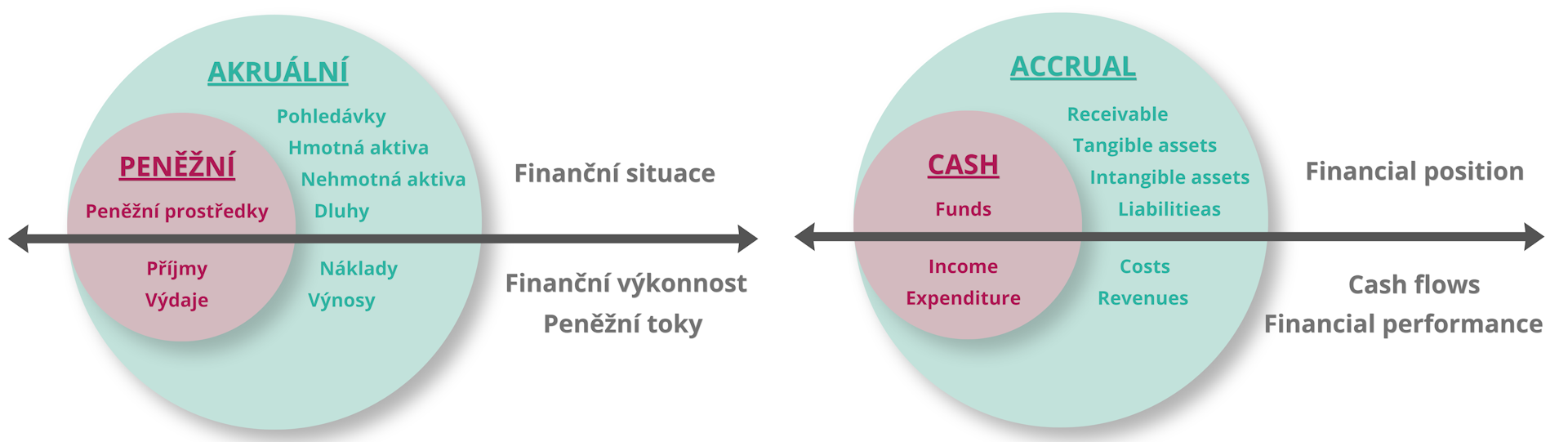
Government accounting information shows not only cash flows, but also assets, liabilities, expenses, revenue and the government's long-term financial position. It can inform the budget process, strengthen accountability for public finances, and support decision-making and management.

Government accounting provides a comprehensive picture of public-sector finances. It captures not only cash flows, but also assets, liabilities, expenses, revenue and other economic events that help assess the government's financial position.
What does the government own? What liabilities has it incurred? What expenses arise from delivering public services? How does its financial position change over time?
Buildings, infrastructure, land, equipment and other resources used by the government.
Obligations and debts that have arisen and must be settled, either now or in the future.
Information on the consumption of economic resources and the value associated with public-sector entities' activities.
The ability to monitor changes in financial position and compare individual reporting periods.
A cash-based view shows when money is received or paid. Accrual accounting adds information about when an economic event actually occurs and how it affects assets, liabilities, expenses or revenue.
An investment is more than a one-off cash outflow. The accrual-based view also recognises the resulting asset and its value in subsequent reporting periods.
An obligation may arise before payment is made. Accounting can therefore recognise a liability in the period to which it relates.
An expense is recognised in the period in which it is incurred, even if the invoice is paid later. This makes results for different periods more comparable. An expense represents the consumption of economic resources—not merely a cash payment. It therefore provides a better measure of financial performance than cash movements alone and enables more meaningful comparisons of financial performance.
Accounting information makes it possible to monitor not only current-year cash flows, but also changes in the value of assets, liabilities and the government's financial position over time.
This timing difference is one of the key reasons accrual accounting provides a more complete information base.
Insights from the Making Use of Government Accounting Information conference (7 April 2026)
“Accounting is a fundamental source of information for users' economic decision-making.”

“Government accounting in the Czech Republic has the potential to serve its users well.”

“Reliable macroeconomic statistics cannot be compiled without reliable accrual data and sufficient granularity.”

“Relevant data are a prerequisite for sound decision-making and transparency.”

Select a scenario to see how it is reflected in government accounting.

Since 2013, the government has been paying compensation to churches over a 30-year period. The outstanding liability is adjusted each year for inflation recorded two years earlier.
In 2024, high inflation (more than 15% in 2022) resulted in an inflation adjustment to the outstanding liability that exceeded the regular annual instalment.
Shows only the amount of the annual repayment.
Shows the outstanding liability, the inflation-related increase, and how the balance has evolved over time.

A public-sector entity builds and equips a new school building.
The project creates a building and other assets that will support education for many years.
The cash-based view shows the cash outflows when construction work, technology and equipment are paid for.
The accrual-based view shows whether an asset is still under construction or has been brought into use, and then allocates its use and wear and tear over the relevant periods through depreciation.

A public hospital receives medical supplies in December and pays for them in January.
The economic event arises when the supplies are delivered and used in the provision of care.
The cash-based view records the expenditure when the hospital actually pays the invoice.
If the supplies were consumed in December, the expense is recognised in December and a trade payable is recognised until payment is made.

A municipality receives a grant in December to renovate a school, but uses part of the funding only in the following year.
The grant provider transferred the funds to the beneficiary.
Expenditure is recognised when the grant is paid.
Accounting shows whether the grant has been used or whether it still represents an advance. If the grant conditions are not met, an obligation to repay part of the funding may arise.

The government owns an office building that it uses over the long term.
The building has value, requires maintenance and its service potential changes over time.
The cash-based view records individual outflows when they are paid.
Accounting recognises the building as an asset and tracks its carrying amount, depreciation, and maintenance and repair expenses.

The government is involved in litigation that may give rise to a payment obligation in the future.
The likelihood and potential financial impact of the ongoing litigation must be assessed.
Until payment is made, the cash-based view will generally recognise no expenditure.
Depending on the circumstances, the accounts may recognise a probable obligation as a provision, or disclose a contingent liability where an outflow is not probable or the amount cannot be measured reliably. This provides information before any payment is made.

A municipality finances the acquisition of new fire engines with a loan.
The vehicles improve public safety and enable firefighters to respond more effectively.
Shows cash movements only: loan proceeds received, loan repayments and routine operating expenditure on the fire engines.
Shows not only cash flows, but also the new vehicles recognised as non-current assets, their depreciation over time, and the loan liability, including the outstanding balance yet to be repaid.
 Video for this example
Watch the Fire Service video
Watch on YouTube →
Articles on government accounting, recordings of conferences and workshops, and other news and perspectives, including posts from social media.

Video about new website on public sector accounting

Video about new website on public sector accounting
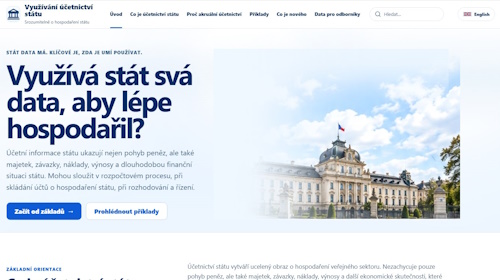
Press release about new website on public sector accounting

Use of central Government Accounting – a joint report by the SAO and the Faculty of Finance and Accounting at Prague University of Economics and Business

Conference organised by the Union of Accountant and the Czech Chamber of Tax Advisers

Special supplement to the Ministry of Finance Information Bulletin: Public Sector Accounting (10/2026)

Article in Accounting for Non-profit Organisations and Municipalities (Czech-language journal, 2/2026)

Article in Internal Auditor (Czech-language journal, 1/2026)
Article in Auditor (Czech-language newsletter, 4/2026)

Professional conference organised by the Supreme Audit Office of the Czech Republic

Article in Accounting for Non-profit Organisations and Municipalities (Czech-language journal, 4/2025)

Video accompanying the joint report by the SAO and the Faculty of Finance and Accounting at Prague University of Economics and Business, “Making Use of Government Accounting Information”.
Use of central Government Accounting – a joint report by the SAO and the Faculty of Finance and Accounting at Prague University of Economics and Business

Press release on the joint report by the SAO and the Faculty of Finance and Accounting at Prague University of Economics and Business, “Use of central Government Accounting”.
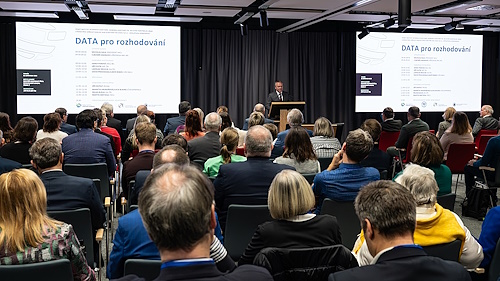
Professional conference organised by the SAO of the Czech Republic
Formal launch of the accounting reform.

Ministry of Finance Information Portal
(monitor.statnipokladna.gov.cz)
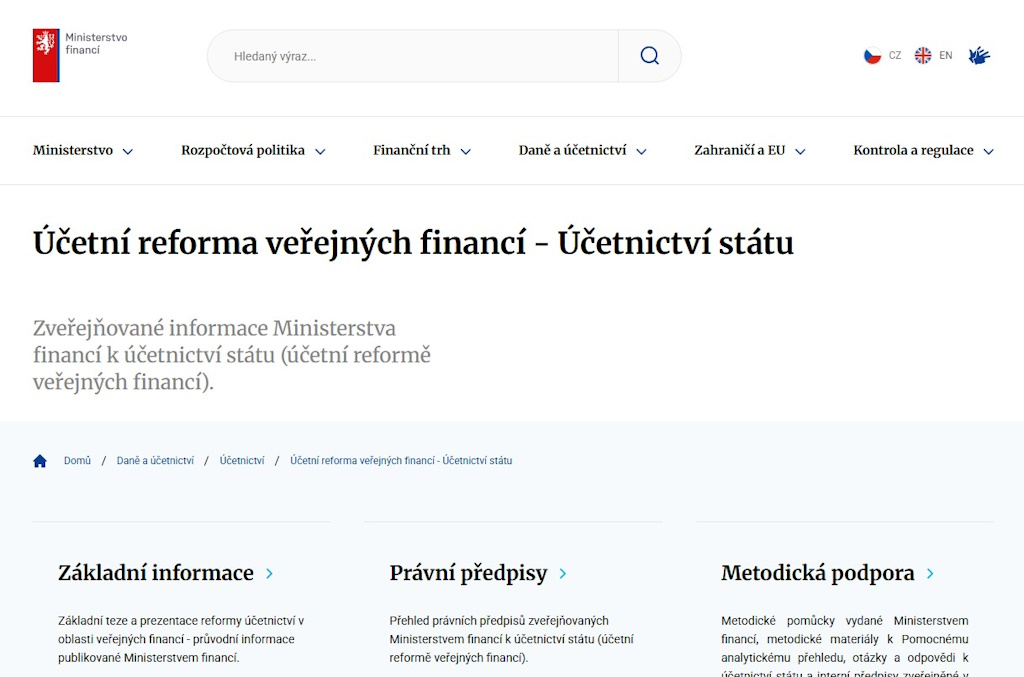
Ministry of Finance website
(mf.gov.cz)
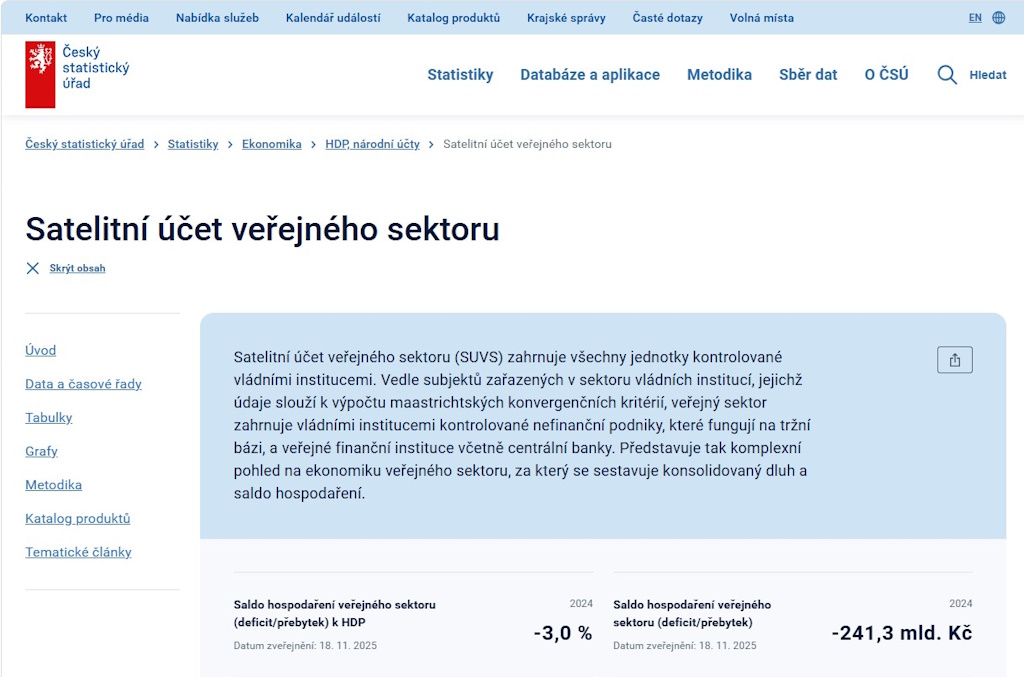
Czech Statistical Office website
(csu.gov.cz)
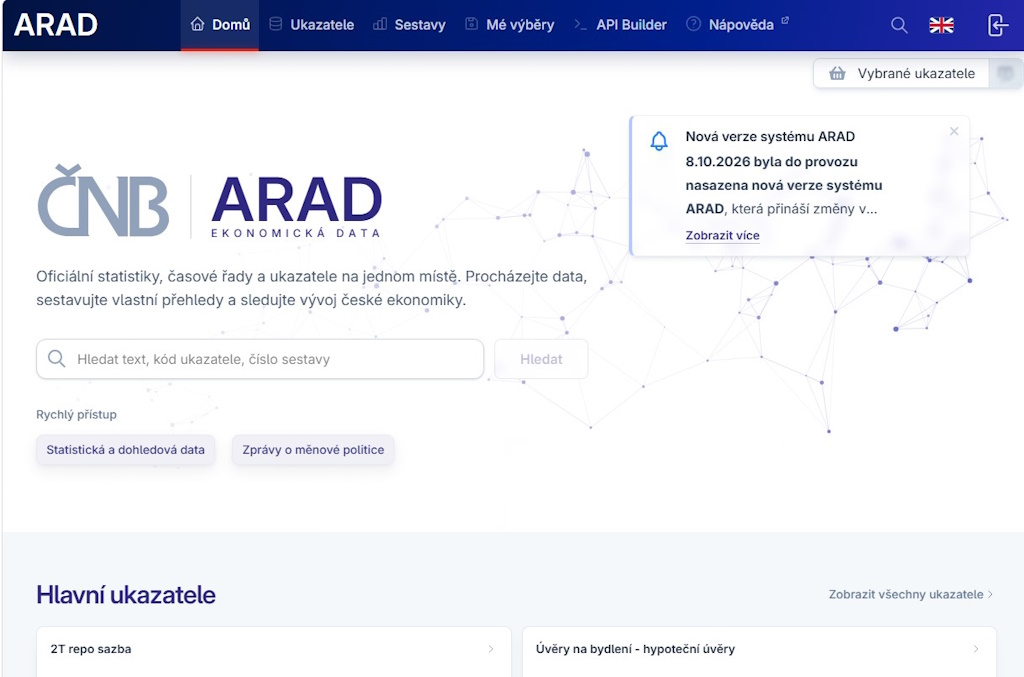
Czech National Bank website
(www.cnb.cz)